Saturday, January 18, 2020

Portugal 2015 - Mediterranean Diet


Technical Details:
Issue Date: 20 July 2015
Designer: Folk Design
Printer: INCM
Process: Offset
Colours: 4 Colours
Size: Stamps 40x30,6 mm, Souvenir Sheet 125 x 95 mm
Values: €0.45, 0.45, 0.72, 0.80

About Mediterranean Diet

The Mediterranean Diet is a food concept that, within the history chronology, is as much timeless as it is accurate. Its classification as “Intangible Cultural Heritage of Humanity” by UNESCO confirms not only the existence of a specific food regime, but also a historic trace born within the Mediterranean. This is the legacy that the current issue of stamps intends to celebrate.

A study launched in the late 1950s, under the coordination of the North American physiologist Ancel Keys has, in 1970, come to some conclusions, which still serve today as a paradigm to justify the so-called Mediterranean Diet. According to the research group led by the professor Keys, the peoples, among the seven countries studied, whose food diet was based on vegetable fats, instead of animal fats, lived longer and had a lower tendency to suffer from cardiovascular diseases. The diet of Crete represented one of the emblematic cases reported. In this Greek island, the researchers found that locals daily consumed an average of 80 to 100 grams of olive oil as food seasoning or they ate olives in generous doses as accompaniment to bread. According to experts, these established habits revealed that the high consumption of monounsaturated vegetable fats such as olive oil (rich in oleic acid) rather than animal fats provided Cretans with a greater longevity and improved health status ― these results were not evident when compared to the inhabitants from other regions and countries under study, whose food modus vivendi differed form others found in Mediterranean.

Although the Mediterranean diet has been born in association with a particular food style, its concept has proved to be quite evolutionary and comprehensive. The UNESCO has initially classified the joint proposal from Spain, Greece, Italy and Morocco in 2010. Three years later, the international peer-review committee met in the city of Baku, in Azerbaijan, to favorably resolve upon the ratification of the original proposal, thus allowing the inclusion of Cyprus, Croatia and Portugal.

In December 2013, Portugal was then registered as a country where the Mediterranean Diet goes beyond the nutritional aspect, persisting as anthropological, sociological and gastronomic heritage. This issue of stamps reveals the Southern gastronomy as a symbol of that heritage. The Algarve region is the natural heir of what the Mediterranean has left us, but the historical background extends also to Alentejo. On the one hand, regional specialties from Alentejo, such as the purslane broth or the sweet potato Portuguese scones, are illustrated in two of the stamps. On the other hand, the dishes particular to the Algarve region, such as the pickled horse mackerels and the chick-peas with pears stew, appear in the other two. The souvenir sheet highlights the Algarve region as the “cradle” of our Mediterranean Diet, with emphasis given to an octopus stew recipe. It is about a philatelic tour through these two regional cuisines seasoned by the Mediterranean which, in spite of being ancestral cuisines, are still part of pleasure of living in the contemporary Portugal.

Friday, December 13, 2019

North Korea 2019 - Traditional Dishes


Technical Details:
Date of Issue: 20 February 2019
Size: 42 mm x 30 mm
Denomination: 160 won
Designer: Ri Jin Hyok
Printing: Offset
Quantity: 10,000 sets (Perforation) ; 1,000.- sets (Imperforation)
Price: $1,60 (Perf), $3,20 (Imperf)


10 Won - Frozen Potato Cake, 
30 Won - Mung Bean Jelly Cake, 
50 Won - Kudzu Root Starch Cake
70 Won - Steamed Terrapin

Thursday, December 12, 2019

Colombia 2018 - Colombian Gastronomy


Technical Details:
Date of Issue: 15 March 2018
Presentation: Sheet with 12 stamps
Size: 40 mm x 30 mm
Printing: 50,004 stamps
Face Value: $ 5,000 COP
Stamp Printer: Cartor Security Printing

Colombia 2019 - UPAEP, Traditional Meals


Technical Details:
Date of Issue: 09 October 2019
Presentation: Sheet with 4 stamps
Size: 40 mm x 30 mm
Printing: 22,364 stamps
Face Value: $ 2,000 COP
Stamp Printer: Cartor Security Printing


Panela: hardened sugar cane molasses. 
Banana chips Banana with panela candy.

Friday, December 6, 2019

Czech Republic 2018 - Martinmas Traditions

Technical Details:
Date of issue 24 October 2018
Face Value: 19,00 CZK
Print Sheets:
 50 stamps
Size: 23 mm x 40 mm
Graphic Designer: Jiří Slíva
Method of Printing: Multicoloured Offset
Note: A stamp identified with the letter A corresponding to the price of Ordinary Letter – Standard up to 50 g in domestic service

Theme:
Symbols associated with Martinmas Tradition - Goose and Wine

A Czech proverb connected with the St. Martin’s Day says, Saint Martin is coming on a white horse, signifying the arrival of first snow that year. Regardless of whether or not he brings snow, he always comes with fresh Merlot, Müller, Portuguese and St. Laurent wines, not to mention the goose. Although the name St. Martin’s wine was first introduced at the Emperor Joseph II’s court to refer to the local counterpart of the beaujolais nouveau, first uncorked at Martinmas, the wine was first officially marketed under the brand name by the Czech Wine Fund in 2005. The resumed Czech tradition successfully competes with the French one. Wheras the French red beaujolais nouveau is uncorked on the third November Thursday, Czech St. Martin’s wines (dry white, rose or red) must be first opened at Martinmas, i.e. on the 11th day of November at 11 a.m. Martinmas goose is another tradition connected with St. Martin. A legend has it that the saint was so modest that he was unwilling to be made bishop of Tours. So when he saw the messengers coming to tell him about his appointment, he hid himself in a barn full of geese. However, their cackling at his intrusion gave him away. Another legend says that he was so disturbed by their cackling during a sermon, that he sentenced them to death and roasting on each anniversary day.

The postage stamp is issued both in the form of sheets and as a book of 8 stamps and 2 x 2 various coupons.

Czech Republic 2019 - Czech Inventions: Sugar cube


Technical Details:
Date of Issue: 06 March 2019
Face Value/ Price: 19,00 CZK
Print Sheets: 50 stamps
Size: 23 mm x 40 mm
Graphic Designer: Jiří Slíva
Method of Printing: Multicoloured Offset

Theme
A motif of a hand holding a sugar cube to sweeten a cup of coffee or tea.

After the end of the Napoleonic wars, attempts at extracting sugar from sugar beet were resumed in the Habsburg monarchy in the1820s. The first modern type sugar manufacture in the western part of the Habsburg monarchy was founded in Kostelní Vydří nearby Dačice in the estate of Karel Maxmilián Dalberg in 1829. In 1833, František Grebner, with the financial support of Viennese banker J.B. Puthon, established a sugar refinery directly in Dačice. The Dačice refinery resumed the tradition of the sugar factory in Kostelní Vydří. Dačice sugar was supplied to Southwest Moravia, South and East Bohemia as well as to Austrian borderlands. Sugar was also sold from warehouses of the Dačice refinery established in Vienna, Pest, Lvov, and also in Brno. Jakub Kryštof Rad, the refinery director, established a manufacture of candied fruit, sweets, and chocolate in Dačice in 1841, in which he also involved his wife Juliana, in order to make better use of some of the sugar refinery products. The difficult-to-use shapes of sugar products, such as cones, hats, or loaves, made Jakub Kryštof Rad to come up with the idea of sugar cubes. Cone-shape sugar was impractical both for business and private use - cones were difficult to pack and easy to break. Also, attempts at cutting an exact amount of sugar were not always successful and a lot of sugar was wasted. The patent for the production of sugar cubes was soon acquired by Prussia, Saxony, Bavaria, Switzerland, and England. An improved form of Rad’s invention is still used by sugar refineries all around the world.

Thursday, October 10, 2019

Costa Rica 2019 - UPAEP, Traditional Meals


Technical Details:
América UPAEP 2019 Typical Meals
Facial Values: 445 and 945 colones
Stamp Printing Type: Offset
Stamp Format and Size: horizontal, 50x30 mm
Perforation: 11
Number of stamps: 40,000 (20,000 per reason)
Stamp inks: Four color
Sheet Composition: 1x2
Sheet Size: 130 mm x 70 mm
Stamp Paper Type: Gummed, Tropicalized, Special for Stamps
Weight of Stamps Paper: 102g
Bulletin Size: 215mmx95mm
Designer: Cristian Ramírez Vargas
Printer House: GOZAKA
Reason for the stamps: Photos of typical foods of rice and beans and ceviche; images provided by Revista Sabores and the Costa Rican Tourism Institute (ICT)

Tuesday, October 8, 2019

Japan 2018 - Traditional Dietary Culture of Japan


1. Kneading: A kneaded mixture of fertilizer and yam in a bowl. 
2. Black letters: A type of toothpick made from black moji. 
3. Arihei Sugar: A type of koji. 
4. Unpei: A craft made from glutinous rice made from cold plum powder and sugar. Also called raw sugar. 
5. Otome: A mixture of sugar and ume powder, packed in a wooden mold and punched. 
6. Ice cake: Powdered glutinous rice. 
7. Oshiage: Salted rice cake. 
8. Uiro: Boiled sugar, mixed with fresh powder and steamed. 
9. Konashi: Steamed and mixed with wheat flour and cold plum powder

Chrysanthemum is the representative flower of autumn. The scissors (* 1) are cut with scissors to create a petal that is “scissors chrysanthemum”.It is a gem that shines with craftsmanship, and the fragrance of chrysanthemums seems to drift. Place it on your favorite plate and use the black letters (* 2) to enjoy it slowly.


A confectionery with chopsticks around a candy ball is called “Kinton”.Seasonal plants can be seen in the light colors of cherry blossoms, green pine, yellow rape blossoms, etc.This red and yellow are reminiscent of colorful autumn leaves.Confectionery such as “Teruyou” and “Nishiki” come to mind.


We have modeled “Shimeji” with Arihei Sugar (* 3), “Matsuba” with Unhirada (* 4), “Akatsuki” and “Ginkgo”, and a small “Ginnan” with Ochiman (* 5). Because of the feeling of being gathered together by the wind, these arrangements are called “breathing”. It's plentiful and you want to enjoy the scenery.


A two-layered dough wrapped around straw was shaped into a pine, and it was sprinkled with ice candy (* 6) as if it were snow. Since pine is evergreen, it has long been loved as a symbol of longevity. Along with bamboo and plum design confectionery, it is also recommended to use it for celebrations such as the New Year and weddings.


This is a savory bun that is made by mixing tsukune rice cake with the dough. The stamps of the wells and plums are pressed, and the green color of the pots is arranged to express the characteristics of the woven part of the pottery. You may feel the playfulness of the creator in the fun of making it look like.


It can be said that it is a staple of New Year's confectionery. One of Miyanaka's Osechi dishes, “Hiso”, is the original form, and the combination of sweetly boiled beef bowl and miso is rare. It is said that miso is a simmered boiled rice, and beef bowl is like a sushi (* 7) that was eaten in the New Year.


In January-February, in addition to the colorful red potatoes and neat white camellia, various camellia flowers will be formed in the form of kneaded or iro (* 8). I want to pay attention not only to petals and leaves, but also to the expression of the flower core. It makes you feel the craftsman's ingenuity, such as adding poppy seeds or rough flour.


A variety of dried confectionery that celebrates the joy of spring.“Running water” and “Butterfly” are represented by Kumohira, and “Aoi” and “Etsubushi” are represented by wooden lanterns. The Chiyo-knot with red and white stripes is Arihira sugar, and it is also appreciated for celebrations. After arranging the hinamatsuri and wild fun in a bowl, prepare a green tea and take a break.


The appeal of Japanese confectionery is not only imitating the shape of a flower, but also expressing it abstractly. This design, which is a Uro fabric with a cocoon in the center, is folded from four sides, and it has the image of a plum before flowering.Considering the buds, the inside is dark red.


Cherry blossoms that Japanese people love. From the beginning of bloom to the appearance of being in full bloom, it is transformed into a confectionery design.Here, it represents a beautiful cherry blossom made of Konashi (* 9) shaped like a tree. If you think that the mold is made of wild cherry trees, you will find the sweets of cherry blossoms even more adorable.

Saturday, September 7, 2019

Iceland 2016 - The Nordic kitchen


Technical Details:
Day of Issue: 18 February 2016
Designer: Oscar Bjarnason
Number per Sheet:10
Printer: Cartor Security Printing
Size: 40 x 30 mm
Printing Process: Offset Litho (CMYK)
Price: ISK 250

The Norden stamps of 2016 are dedicated to Nordic food and what has been termed as the “Nordic kitchen”. In Iceland’s case the focus is on the “Icelandic kitchen”, the stamp featuring Icelandic food ingredients. The history of Icelandic cuisine is rather short and simple. However, an interesting national kitchen has developed – the cuisine being based on excellent ingredients and old traditions. Icelanders have access to fresh and unpolluted ingredients. Little is known about the food and eating habits of Icelanders during the settlement´s first centuries. Settlers brought with them sheep, goats, cattle, pigs, chickens and even ducks. The settlers‘ diet must have been varied. Milk was processed into a variety of products. The exploitation of seabirds and fresh water fish has always been an important part of obtaining food. Icelandic lamb is considered much more like venison than lamb in markets abroad. The main advantages of Icelandic beef is that it is clean and unpolluted. The sea around the country has always been a major source of food. Dried fish was an early and important foodstuff. The essence of the Icelandic kitchen is its focus on natural ingredients, fresh seasonal vegetables, fresh and processed fish.

Sunday, August 4, 2019

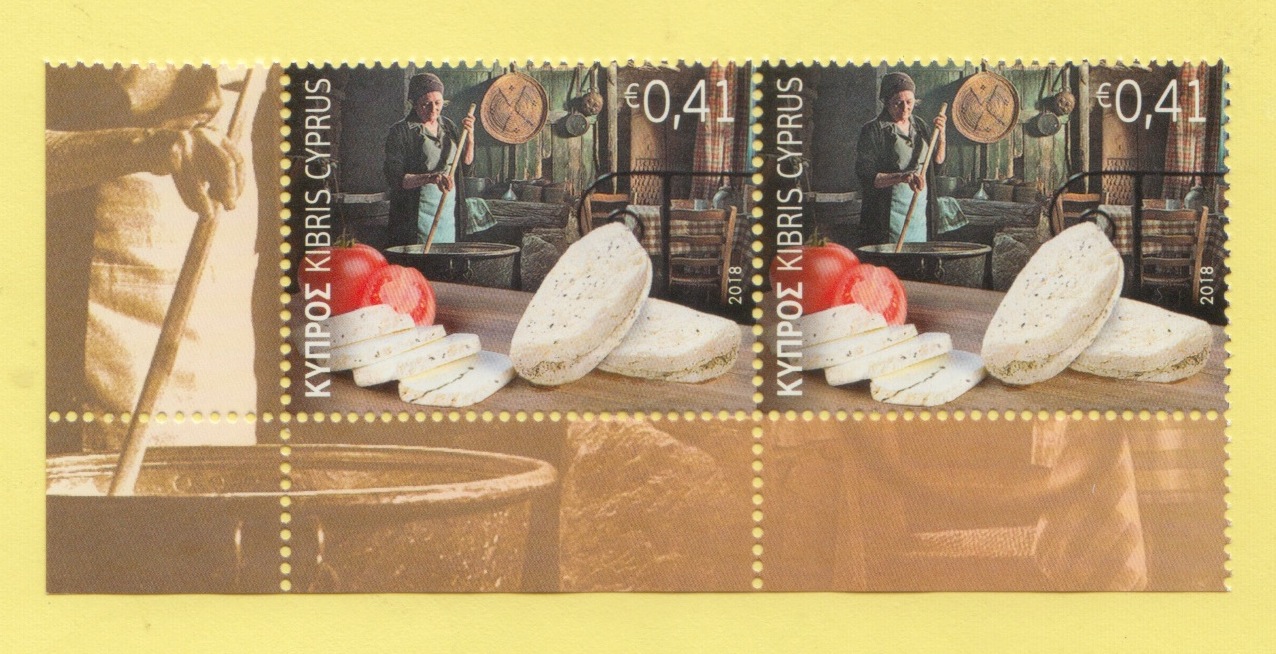
Cyprus 2018 - Halloumi Cypriot Cheese


Technical Details:
Date of Issue: 28 March 2018
Width: 40.0 mm
Height: 30.0 mm
Quantities: 190.000
Denomination: € 0,41
Number in set: 1
Layout/Format: Sheet of 8
Perforations: 13.5 by 13.5
Stamp Issuing Authority: Department of Postal Services
Printer: Veridos Matsoukis SA Greece

Halloumi

Halloumi (fresh or mature) is the Cypriot cheese, made from sheep's or goat's milk or a mixture of the two previous with or without cow's milk.

A lot of reports have testified to the production of Halloumi in Cyprus since ancient times. Venice Doge Leonardo Dona, who lived in Cyprus for two years 1556 - 1558 AC, in one of his manuscripts makes reference to this Cypriot product by attributing it as "calumi". There are also many other references to Halloumi, including that of Archimandrite Kyprianou in 1788 AC.

The characteristics of Halloumi, and in particular its ability not to melt at high temperatures, allow it to be consumed in a variety of ways. Thus, food enthusiasts can enjoy it both grilled or fried as well as a component of pasta or soup (such as trachanas). Halloumi holds a special position in the Cypriot consumer's diet, but is also the first exported agricultural product of Cyprus. It should be stressed that Halloumi, as a Cypriot product, is already protected in several countries through registered trademarks. An application has already been submitted to the European Commission, from Cyprus, for registration of the name Halloumi/Hellim in the European Register as a Protected Designation of Origin (PDO).

Monday, July 1, 2019

Austria 2019 - Hochriegl Sparkling Wine Cellar


Technical Details:
Issue Date:15 May 2019

About Hochriegl Sparkling Wine Cellar

A Traditional Viennese Sparkling Wine

Almost 130 years of sparkling indulgence – this year’s stamp from the “Classicaltrademarks” series is dedicated to a traditional Viennese company: the Hochriegl sparklingwine cellar.

The Viennese family-run company Kattus founded the Hochriegl sparkling wine cellar in 1890. This was a cultural golden age for Vienna, with extravagant balls and receptions at court and in the homes of the nobility and the bourgeoisie offering plentiful opportunities to enjoy epicurean treats of every kind. The good quality of the sparkling wine resulted in the company, headquartered in Vienna's Döbling district, quickly being appointed supplier to the court.

The name Hochriegl is taken from a vineyard outside Vienna's gates, but nowadays it is associated with the classic Viennese sparkling wine, which impresses with its fine quality and symbolises pleasure and love of life. In 2009 Hochriegl was sold to the Schlumberger sparkling wine cellar, but the name was retained and the range is being continuously developed. Despite the reintroduction of the sparkling wine tax in 2014, Hochriegl remains economically viable.

The design on the stamp was taken from a poster by the Austrian graphic designer and illustrator Walter Hofmann from the year 1958. Hofmann's advertisements, with their clear style, were a characteristic feature of Austrian streets throughout the 1950s and 60s. His designs included posters advertising tourism in Austria and brands such as Nivea and PEZ.

Varieties of Sparkling Indulgence

Even today, there is a tendency to associate sparkling wine with luxury, not so much because it is expensive but because it is traditionally drunk on special occasions. That makes it an exclusive pleasure to be enjoyed when celebrating. Innovative new varieties and an attractive design lend it a contemporary feel and an air of joie de vivre.

Since 2011 the many high quality varieties, such as the rosé, the aromatic Ti Amo or the classic Hochriegl Trocken, have been supplemented by innovative Frizzante creations, which appeal to new target groups. Frizzante has a lower alcohol content and contains less carbon dioxide, and it is not subject to the tax on sparkling wines. Fruity flavours such as elderberry, grapefruit or berry make it a popular drink for the summer.

Sunday, April 14, 2019

Canada 2019 - Sweet Canada

Minisheet


Indulge your sweet tooth and explore the delicious origins of five famous Canadian desserts with this souvenir sheet, part of our Sweet Canada issue. This fun and colourful collectible is a great gift for cooking and baking enthusiasts, as well as stamp collectors of all ages.
The featured desserts are Nanaimo bars, Saskatoon berry pie butter tarts, tarte au sucre (sugar pie) and blueberry grunt. On the front of the souvenir sheet, the uniquely shaped stamps are arranged on a recipe card background.
Rich and chocolatey Nanaimo bars have been associated with their namesake Vancouver Island city since the no-bake recipe first appeared there in the 1950’s.
Saskatoon berry pie, notable for the unique apple and almond taste of its fruit, is a true Canadian original. High in fibre, protein and antioxidants, the berries were once a staple of Indigenous people and Prairie settlers.
Butter tarts have become an object of cultural pride in some Canadian communities, with several Ontario towns boasting the best bakers of these sweet pastries.
An indispensable offering at Quebec patisseries, tarte au sucre has centuries-old European origins that were adopted by early arrivals to New France.
Named for the noise it makes while cooking, blueberry grunt has been enjoyed on Canada’s East Coast for generations.
  • ISSUE DATE: April 17, 2019
  • STAMP DESIGNER: Roy White, Liz Wurzinger, Subplot Design Inc.
  • ILLUSTRATION: Mary Ellen Johnson
  • STAMP VALUE: PermanentTM (domestic rate)
  • QUANTITY PRODUCTS: 80,000
  • DIMENSIONS: 127 mm x 90 mm
Booklet

We’re serving up huge helpings of Canadian culinary history with our Sweet Canada stamp issue. This booklet of 10 PermanentTM domestic stamps dishes up the origins of five delicious Canadians desserts and takes you on a tasty trip from coast to coast.
The featured desserts are Nanaimo bars, Saskatoon berry pie butter tarts, tarte au sucre (sugar pie) and blueberry grunt. The fun-shaped stamps are arranged on a recipe card background. The back of the booklet also features a recipe box motif.
Rich and chocolatey Nanaimo bars have been associated with their namesake Vancouver Island city since the no-bake recipe first appeared there in the 1950’s.
Saskatoon berry pie, notable for the unique apple and almond taste of its fruit, is a true Canadian original. High in fibre, protein and antioxidants, the berries were once a staple of Indigenous people and Prairie settlers.
Butter tarts have become an object of cultural pride in some Canadian communities, with several Ontario towns boasting the best bakers of these sweet pastries.
An indispensable offering at Quebec patisseries, tarte au sucre has centuries-old European origins that were adopted by early arrivals to New France.
Named for the noise it makes while cooking, blueberry grunt has been enjoyed on Canada’s East Coast for generations.
  • ISSUE DATE: April 17, 2019
  • STAMP DESIGNER: Roy White, Liz Wurzinger, Subplot Design Inc.
  • ILLUSTRATION: Mary Ellen Johnson
  • STAMP VALUE: PermanentTM (domestic rate)
  • QUANTITY PRODUCTS: 200,000
  • DIMENSIONS:
    • Sugar Pie: 34.4 mm x 30.5 mm
    • Butter tart: 32 mm x 29.4 mm
    • Saskatoon Berry Pie: 40.9 mm x 30.9 mm
    • Nanaimo Bar: 35.1 mm x 32 mm
    • Blueberry Grunt: 43.1 mm x 27.9 mm

Friday, March 8, 2019

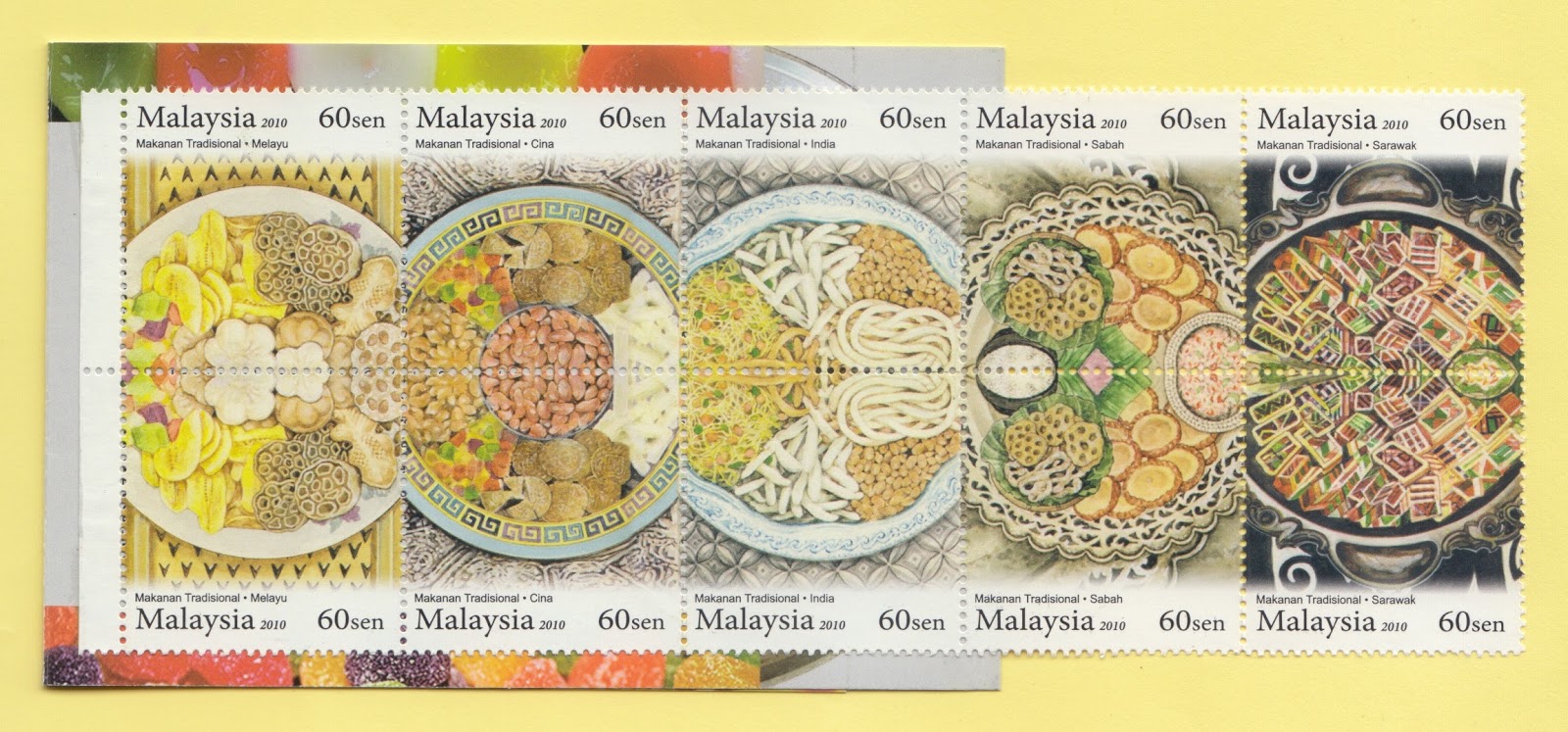
Malaysia 2010 - Traditional Festive Food


Technical Details:
Date of Issue 10 August 2010
Sheet Content: 20 Stamps
Paper: SPM Watermarked, Phosphor Coated
Printing Process: Lithography
Printer: Percetakan Keselamatan Sdn Bhd
Stamp Designer: Hazel Design Sdn Bhd

Need the 80 cents stamps and SS.

Malaysia 2019 - Exotic Foods


Monday, February 4, 2019

German - Bread Culture 2018


Wet adhesive stamps of 2.60 EUR each in a sheet of 10, suitable for franking Maxi letters up to 1,000 g within Germany.


Draft:
Carsten Wolff, Frankfurt am Main
Motive:Slices of five typical German breads
Photo: Lilly Hummel, Frankfurt am Main
Value:
2,60 EUR
Format PWz:
Width: 34.89 mm; Height: 34.89 mm
Format ten-sheet:
Width: 209.00 mm; Height: 104.00 mm
Arrangement PWz:
5 PWz next to each other, 2 PWz with each other
Arrangement EAN code:
An EAN code is placed on all four edge pieces of the narrow margin page. The edge pieces remain white.
Printing house:
Bagel Security-Print GmbH & Co. KG, Mönchengladbach
Substrate and printing process:
Coated, white and fluorescent postage stamp paper DP II; Multicolor offset printing
Issue date: 02. January 2018

========

Self-adhesive postage stamps for 2.60 EUR each in a set of 10, suitable for the franking of maxi letters up to 1.000 g within Germany.
Size of the single stamps: 34.89 x 34.89 mm. Size of the set: 90 x 130 mm.
Design: 10 self-adhesive special postage stamps "German bread culture".
The motif was designed by Carsten Wolff, Frankfurt am Main.
First day of use: 03. May 2018.

Tuesday, January 29, 2019

Netherlands 2018 - All Holland Bakes (Heel Holland Bakt)


The Hague, December 10, 2018 – This Sunday was the day: the first episode of a new TV season “Heel Holland Bakt” at broadcaster MAX. During the broadcast of RTL Late Night on 7 December, jury member Janny van der Heijden was surprised with special stamps on the occasion of the start of the 6th season.
Passionate amateur bakers
In the popular TV series “Heel Holland Bakt”, André van Duin, Jannyvan der Heijden and Robèrt Beckhoven go in search of the Netherlands’ mosttalented home baker. In 8 broadcasts, 10 passionate amateur bakers compete forhonor. Ultimately, there is only one winner, namely the one who, according tothe professional jury, best controls all baking disciplines.

From meringue to cheesecake
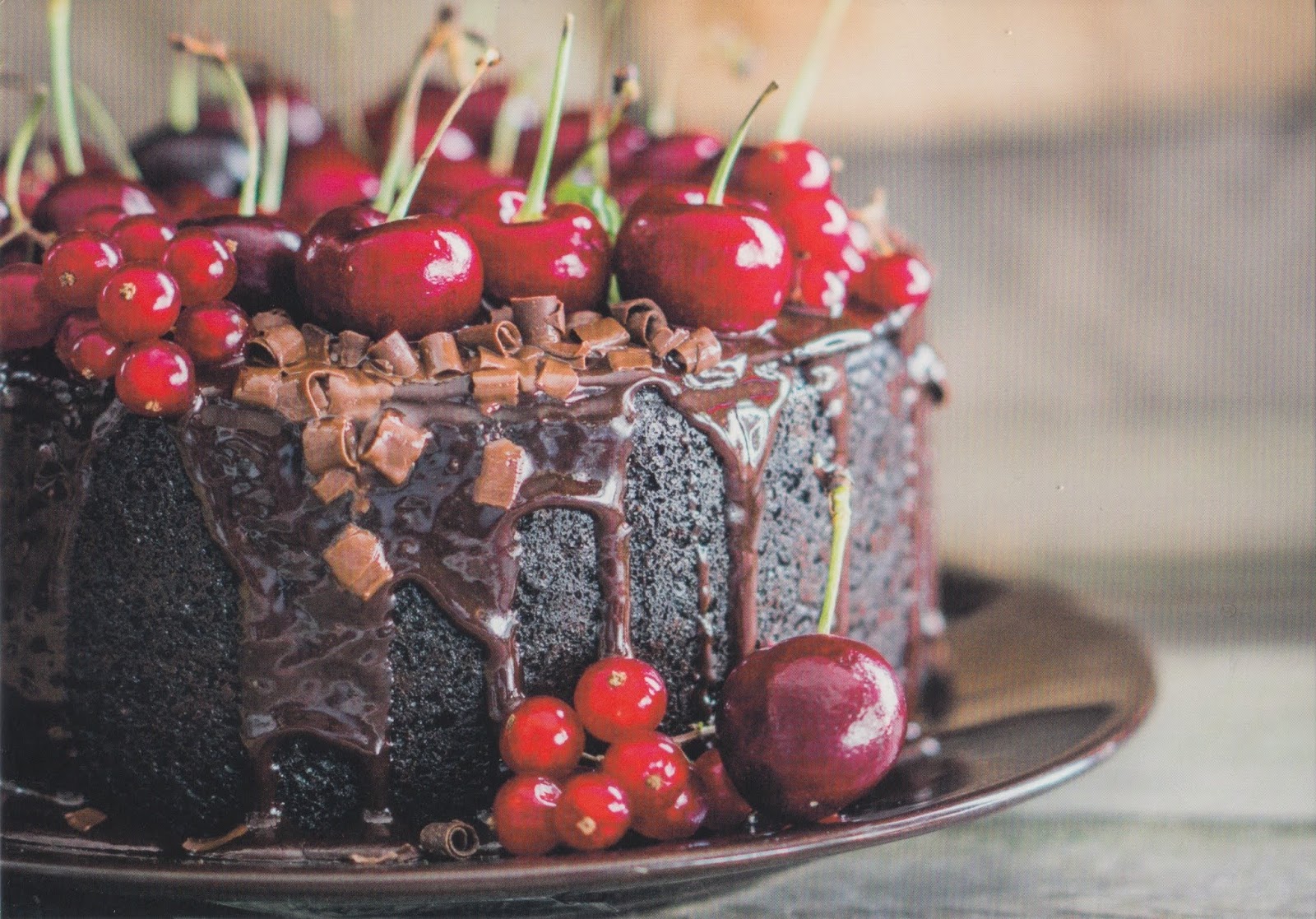
To celebrate the start of the 6th season PostNL has issued a “Heel HollandBakt” mail set. The post set consists of 5 maxi cards and a stamp sheetwith 5 different stamps. On the cards and on the stamps are colorful picturesof popular cakes and pastries: a meringue with currants and blueberries, acherry chocolate cake, an apple pie in rose form, a foam cake with raspberries,blackberries and blueberries and a cheesecake with figs. The stamp sheetletcontains a large photo of the entire jury of “Heel Holland Bakt.”

‘Fantastic’
Janny van der Heijden received the stamp sheet Friday in RTL Late Night.”Wow, I had not seen them yet. What have they become beautiful, fantastic!”

Availability
The postset “Heel Holland Bakt” consists of 5 maxi cards and a stampsheet with 5 different personal stamps with the value indication Nederland 1,intended for mail up to and including 20 grams with a destination within theNetherlands. The mail set costs 8.95 and can be ordered via www.postnl.nl/HeelhollandBakt since 7 December. The mail set can also be ordered by telephone at CollectClub’s customer service on telephone number 088 – 868 99 00. The period ofvalidity is undetermined.

Sunday, December 30, 2018

Denmark 2018 - Wild Food


Natural Eating 

The Danish countryside is full of edible plants that can be eaten both raw and cooked. Five of the most common now feature on stamps. Sustainable and eco-friendly. More and more people have begun to head out into the countryside to pick, or gather mushrooms, seaweed, herbs and other edible plants. By picking and using the wild seasonal produce provided by Mother Nature, you are participating in a sustainable culture in which you not only make better use of natural resources, but can also enjoy tasty and fully natural culinary treats. Environmentally friendly, healthy and free of charge.

Denmark - Open Sandwich 2012 (Self Adhesive)


Egg and Prawns Sandwich
Rolled Sausage Sandwich
Potato Sandwich
Roast Beef Sandwich

Sunday, December 23, 2018

Malaysia 2017 - Festival Food Series - Indian


Technical Details:
Date of Issue: 17 October 2017
Stamp Value: 65 Cent, 80 Cent, 90 Cent & RM5
Stamp Size: 30 mm x 40 mm
Soevenir Sheet Size: 80 mm x 80 mm
Perforation: 14
Stamp Designer: Reign Associates Sdn Bhd
Printing Process: Lithography
Printer: Southern Colour Print, New Zealand
Stamp Paper: Tullis Rusell High Reading Yellow / Green Phosphor Gummed Stamp Paper 103gsm

Malaysia 2017 - Festival Food Series - Malay


Technical Details:

Date of Issue: 06 June 2017
Stamp Value: 65 Cent, 80 Cent, 90 Cent & RM5
Stamp Size: 30 mm x 40 mm
Soevenir Sheet Size: 80 mm x 80 mm
Perforation: 14
Stamp Designer: Reign Associates Sdn Bhd
Printing Process: Lithography
Printer: Joh. Enschede Stamps B.V., The Netherland
Stamp Paper: 102gsm PVA Gummed OBA FREE Stamp Paper

Malaysia 2017 - Festival Food Series - Kadazandusun and Dayak


Technical Details:
Date of Issue: 16 March 2017
Stamp Value: 60 Cent, 80 Cent, 90 Cent & RM5
Stamp Size: 30 mm x 40 mm
Soevenir Sheet Size: 80 mm x 80 mm
Perforation: 14
Stamp Designer: Reign Associates Sdn Bhd
Printing Process: Lithography
Printer: Joh. Enschede Stamps B.V., The Netherland
Stamp Paper: Tullis Rusell High Reading Yellow / Green Phosphor Gummed Stamp Paper 103gsm

Malaysia 2017 - Festival Food Series - Chinese


Technical Details:
Date of Issue: 24 January 2017
Stamp Value: 90sen, RM1, RM1.10 & RM5
Stamp Size: 30 mm x 40 mm

Soevenir Sheet Size: 80 mm x 80 mm
Perforation: 14

Stamp Designer: Reign Associates Sdn Bhd
Printing Process: Lithography
Printer: Southern Colour Print, New Zealand
Stamp Paper: Tullis Rusell High Reading Yellow / Green Phosphor Gummed Stamp Paper 103gsm

Saturday, December 15, 2018

Faroe Islands 2016 - Nordic Food Culture


Technical Details:
Date of Issue: 26 April 2016
Value: 9,00 Faroese Krona (Danish Krone)
Stamp Size: 55 mm x 33 mm
Photo: Fotostudio
Printing Method: Offset
Printer: Cartor Security Printing, France
Postal Use: Small Letters Inland - 0-50 gr

Nordic cuisine is the theme of the joint Nordic stamp issue this year.
The Faroese contribution to this issue depicts some of the traditional Faroese specialities.

Faroese Food Culture
Nordic cuisine is the theme of the joint Nordic stamp issue this year. The Faroese contribution to this issue depicts some of the traditional Faroese specialties which are stored in the so-called “hjallur”. This is the Faroese variant of the pantry, a drying shed ventilated by the wind all year round. Hjallurin serves both as cold storage and a setting for various forms of food preservation.

The location of the Faroe Islands in the middle of the North Atlantic has always had a crucial impact on food preservation and thus for the Faroese kitchen. For centuries the grassy treeless landscape has not been conducive to highly advanced agriculture. Grain cultivation was difficult - it is said that on average grain harvest failed every three years. To a certain extent the Faroese have always been dependent on grain imports, and in the former half of the 20th century the hope of grain cultivation was finally abandoned. Instead, potatoes were a solid crop after its introduction in the early 19th century. Along with sporadic cultivation of beets and imported grain, the potato became a basic staple in the Faroese kitchen.

On the stamp‘s left hand side four hares have been hung up for curing. The hare is the only land mammal hunted by the Faroese. It was introduced in the middle of the 19th century, with its hunting in mind – and hares can now be found on most islands. The hare‘s reproductive cycle makes it suitable for hunting. They breed three times a year - and it is estimated that each year approximately 7,000 hares are shot.

Beside the hares there are four “grindalykkjur”, meat strips of pilot whale suspended to be dried by the wind. The pilot whale has always been of decisive significance as a source of meat in the Faroe Islands. In addition to being eaten fresh, cooked with whale blubber, “grind” has also been salted and dried. In a wilted state (semi-dry and slightly fermented) it can be boiled. This is especially true of meat of inferior quality, ribs, shoulder blades, etc. The wind-dried strips depicted on the stamp are eaten with whale blubber, which has either been dried or pickle salted –recognized, moreover, as a delicacy.

The stamp also depicts “greipur”, which consists of wind-dried fish. Fishes are tied together in pairs, called “greipa“, and then hung up in „hjallurin“ for drying. At first a certain maturation and fermentation of the fish takes place, lending it a strong flavour. In this first stage the product is called “ræstur fiskur”, fermented fish which is served cooked. Fat of either dried or salted whale blubber is used with the fish called ”sperðil”, a sausage made of sheep‘s tallow in a bowel, or ”garnatálg” which consists of cleansed fermented sheep intestines. The intestines have been cured, then ground and mixed with fresh sheep‘s tallow. The result is a very strong-tasting tallow which is melted and poured over the dried fish and potatoes.

If the fish is left suspended for a longer period of time, it dries up, becomes very hard and should be beaten tender before eating. Dry or pickle-salted whale blubber or butter, and potatoes, are served with the fish.

A principle of the traditional Faroese kitchen is that everything should be utilized to the utmost. Therefore, “mørur” also forms a part of the foodstuffs in our hjallur. Mørur consists of the sheep‘s intestines and organs and is a part of the traditional diet in the autumn.

We will not dwell on the numerous varieties of dishes that can be prepared from mørur, only name a few.

“Tálgalivur” is sheep‘s liver filled with mutton tallow, most often with onions and peppers. “Blóðmørur” is a kind of blood sausage with blood, flour, tallow, and sometimes raisins in cleansed sheep stomachs. The tallow and sheep stomachs are depicted in the bowl in the centre of the picture.

Other examples indicating that everything can be exploited to the utmost are the cod heads just above the bowl. If they are large enough, fish heads make for excellent dining. They can also be cut to “kjálkar”, fish cheeks fried or boiled fresh or salted, and “lippur”, gills consisting of the tongue and the fatty meat under the chin.

A few guillemots hang beside the “mørur”. Traditionally, seabirds of various species have also been a part of the Faroe kitchen. Guillemots, razorbills, puffins and fulmars are the most common - and on the island of Mykines gannet is also a prized for its taste. The availability of birds is limited and varies with time. The hunting of birds is subject to very strict preservation regulations.

When sheep are slaughtered in the fall, almost all carcasses are hung to mature and dry. At first time a certain fermentation takes place, just like with the fish, but there are three stages in the drying process. After Christmas, the meat reaches a stage where it is called “ræst”, i.e. fermented and semi-dry. “Ræst” meat has a distinctive strong flavour (and odour). It is a highly valued delicacy, served fried or boiled, also providing for a great soup.

After having hung for a few more months, the meat is dry and eaten without further preparation. Dried sheep meat is used as cold cuts on brown bread or the traditional “drýlur” (unfermented bread). Most dried meat is eaten at this stage, but if it hangs to dry for a year, it becomes “skerpikjøt” which is drier and harder than regular dried meat.

These three phases of the drying process for mutton, “ræst kjøt”, “turt kjøt” and “skerpikjøt”, are by most Faroese considered to result in the finest delicacies in the traditional Faroese kitchen. Recent years have seen changes in the traditional serving methods and preparation of Faroese specialties. Star chefs have experimented with food, combined it in creative ways and with non-traditional garnish. This has given rise to a large selection of brand new tasting experiences, which even appeals to people outside the Faroes. The gourmet restaurant “Koks” in Torshavn is well known for its successful fusion cuisine and gourmet artistry with cured raw materials.

It should be added that these cured and dried foods can only be produced thanks to the Faroe high and very salty air humidity, which prevents the food from rotting.

Lately experiments have been conducted, for instance with the aim of wind-drying Danish ham and cheese. These experiments have proved to be quite promising.

Anker Eli Petersen

Friday, December 14, 2018

Saturday, December 1, 2018

Algeria - Algerian Couscous 2018


The Couscous

Algerian Couscous: Couscous is a traditional food dish that dates back thousands of years and occupies a prominent position in Algerian cuisine. Today, it is resistant to contemporary cuisine. It is a dish based on a grain of wheat flour. Therefore, the history of this dish is inseparable from the history of the most cultivated grain. The world, namely wheat and this seven thousand years ago .

Experts confirm that the date of the cesacean dish dates back to the period 148-202 BC. Remains of pottery vessels similar to those used in the preparation of couscous were found in tombs dating back to the period of the Amazigh king Massinissa. The entry of Islam in North Africa, adopted by the Arab conquerors, where the process of exploration in the Tiaret area in Algeria, found some of the pots, including the amount used in the preparation of couscous dating back to the ninth century .

The word Saxo, which has become Xxx and Cixi in the Arabic language of North Africa, is found in the dialects of all of Algeria and North Africa. It is a word that refers to wheat that is good in stereotypical and present tense in everyday life. It is applied to all occasions such as weddings, The dish is from one region to another like Xuxu and Saxo in the Kabylie region to Algiers, known in the east of the country as Couscous, Grace, Barboche and is called in the Mezab region of Ocho while in the west of the country is named Food .

So Falcxi is a real national dish and is prepared in various ways and cooked in combination with meat of all types and salted dried meat or even with the fish and offers Almrk is a mixture of vegetables and beans and spices and called "Alarqa" Arabic and "watering" Amazighs in red, yellow or white colors, as well as other types of mascara, called "Al-Safa" and other mascara and salted, known as "mashed ". 

This ancient and cross-cultural dish has remained authentic despite the passage of time as it is the staple food in North Africa and the national dish in the Maghreb countries (Algeria, Tunisia and Morocco), which is strongly calling for it as a cradle. The couscous is the specialty of Maghreb cuisine and North Africa as a universal intangible heritage of humanity for UNESCO. This classification will be a means of promoting strong ties between the peoples of the Maghreb.


Drawing: Zeinab Bahri
Value: 25 دج
Stamp size: X29 43
Printing Press: Algerian Bank Press
Method of printing: Ovens
Circular document: a photographer envelope at 7,00 dj and using a photo stamp for the first day.
Pre-sale: On Tuesday, 12 and Wednesday, 13 June 2018, in all major post offices in 48 states .
General sale: Thursday, June 14, 2018 at all post offices